
Mobile Batching Plants for Sale
Low-Cost Mobile Batching Plants for Sale – Maximize ROI
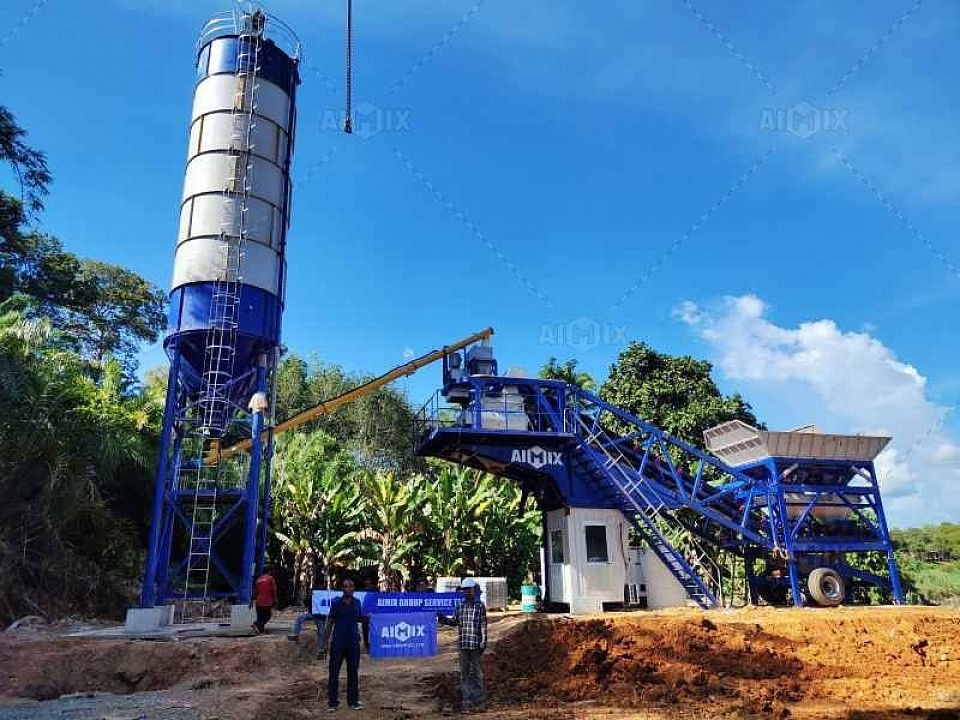
Investing in a mobile batching plant is a cost-effective way to improve efficiency in construction projects while reducing operational costs. Mobile batching plants provide flexibility, allowing contractors to produce high-quality concrete directly at job sites. Compared to stationary plants, they are easier to transport, install, and operate, making them an attractive option for businesses aiming to maximize return on investment (ROI).
Benefits of Mobile Batching Plants
Cost-Effective Solution – Mobile batching plants for sale reduce transportation costs and dependency on ready-mixed concrete suppliers. By producing concrete on-site, contractors can optimize resources and minimize wastage.
Flexibility & Mobility – These plants can be quickly relocated to different project sites, ideal for infrastructure development, road construction, and temporary projects.
Fast Installation & Setup – Mobile plants require minimal foundation work and can be operational within a few hours.
Lower Maintenance Costs – With simple structures and easy-to-replace components, mobile batching plants have reduced maintenance requirements.
Adaptability for Various Concrete Types – They support the production of different concrete mixes, including wet mix concrete, dry mix concrete, ready-mix concrete, and precast concrete.
Types of Batching Plants
When considering a mobile batching plant for sale, it is essential to compare different types of batching plants available in the market:
Mobile Concrete Batching Plant – Designed for quick mobility, it consists of an integrated mixer, weighing system, and conveyor.
Stationary Concrete Batching Plant – Suitable for long-term projects with higher production capacities but lacks mobility.
Wet Mix Concrete Batching Plant – Produces ready-mix concrete with precise water control, ensuring consistent quality.
Dry Mix Concrete Batching Plant – Uses dry ingredients mixed on-site with water, ideal for large-scale applications.
Precast Concrete Batching Plant – Used for manufacturing preformed concrete products in a controlled environment.
Compact Batching Plant – A smaller version, suitable for projects with limited space and lower production requirements.
Factors Affecting the Cost of Mobile Batching Plants
Several factors influence the price of a mobile concrete batching plant:
Production Capacity – The higher the capacity (e.g., 25m³/h, 50m³/h, 75m³/h), the more expensive the plant.
Automation Level – Fully automated plants offer better efficiency but come with a higher price tag.
Component Quality – High-grade mixers, silos, conveyors, and control systems increase durability and performance.
Brand & Manufacturer – Reputable brands like Aimix, Aicrane, and Liebherr provide reliable equipment at competitive prices.
Additional Features – Customization options such as additional storage bins or advanced mixing technologies impact costs.
Maximizing ROI with a Mobile Batching Plant
To ensure a high ROI, consider the following strategies:
Choose the Right Plant Type – Evaluate project needs to select the most suitable plant model.
Optimize Production Efficiency – Proper training and automation can reduce labor costs and improve output.
Regular Maintenance – Preventative maintenance prolongs the lifespan of the plant and reduces downtime.
Reduce Material Wastage – Using accurate weighing systems minimizes excess raw material usage.
Leverage Local Support & Service Centers – Working with local suppliers for spare parts and servicing can reduce operational costs.
Where to Find Low-Cost Mobile Batching Plants for Sale
Several suppliers in Malaysia and Indonesia offer affordable mobile batching plants with competitive pricing and after-sales support. Companies like Aimix, Aicrane, and Schwing Stetter provide high-quality models suitable for different project scales. Buyers should compare features, warranty terms, and customer reviews before making a purchase.
Conclusion
Purchasing a low-cost mobile batching plant is an excellent investment for contractors looking to enhance productivity while minimizing expenses. By choosing the right plant type, optimizing operations, and maintaining equipment properly, businesses can maximize their ROI and stay competitive in the construction industry. Whether you need a wet mix, dry mix, stationary, or precast batching plant, there are numerous cost-effective options available to meet your project demands.
Compact Layout Innovations in Portable Concrete Batch Plant Engineering
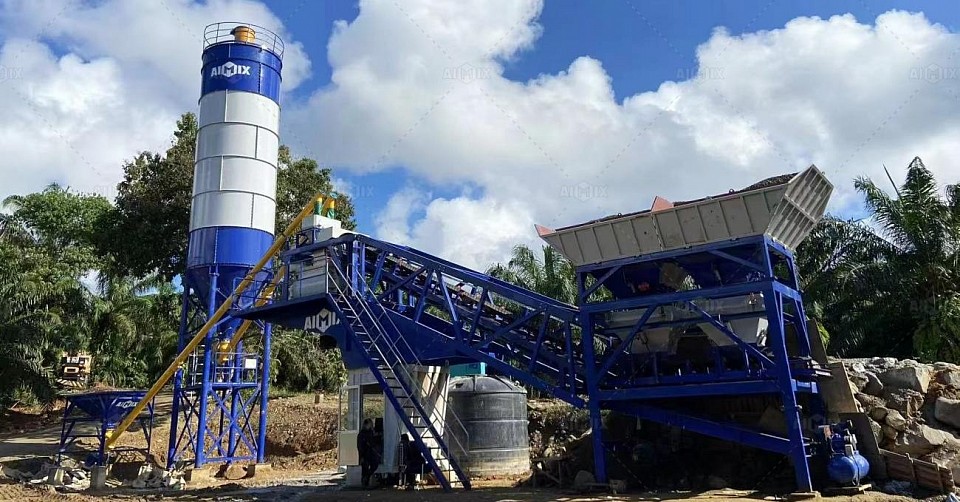
The demand for faster project delivery, constrained construction sites, and flexible production capacity has driven major innovations in portable concrete batch plant engineering. Among these innovations, compact layout design stands out as a defining feature. Modern portable plants are no longer simply downsized versions of stationary facilities; they are carefully engineered systems that maximize productivity while minimizing footprint, transportation volume, and installation time. These advancements have also shaped the development of compact concrete batching plants, which balance mobility, efficiency, and performance in challenging environments.
The Need for Compact Layouts in Portable Plants
Portable concrete batch plants are commonly deployed on temporary, remote, or space-limited project sites such as highway construction, bridge works, urban redevelopments, and island or mining projects. Traditional batching plant layouts—with long conveyors, wide aggregate yards, and high batching towers—are often impractical in these settings.
Compact layouts reduce land requirements, limit civil foundation work, and simplify logistics. From an engineering perspective, this means integrating multiple functional systems—aggregate storage, weighing, mixing, cement handling, and control—into a tight, well-organized structure without compromising accuracy or output. This challenge has become a major driver of innovation across the portable plant sector.
Vertical Integration and Stacked Design Concepts
One of the most significant layout innovations is vertical integration. Instead of spreading equipment horizontally, modern portable and compact concrete batching plants use stacked or semi-vertical designs. Aggregate bins are positioned above or close to the weighing units, which in turn feed directly into the mixer below.
This gravity-assisted material flow shortens transfer paths and reduces reliance on long belt conveyors. As a result, energy losses decrease, cycle times improve, and mechanical complexity is reduced. Vertical layouts also allow plants to fit into narrow sites while maintaining respectable production capacity, especially when paired with high-efficiency twin-shaft or planetary mixers.
Modular Frame and Containerized Structures
Modularity is another cornerstone of compact layout innovation. Portable plants are increasingly engineered as modular units that can be transported in containers or on standard trailers. Each module—aggregate bins, mixer platform, cement silo interface, or control cabin—is designed to function as part of a tightly integrated system.
This approach minimizes on-site assembly and ensures that spatial relationships between components are pre-optimized at the factory. For compact concrete batching plants, modular frames also improve structural stiffness and alignment accuracy, which are critical for maintaining weighing precision in compact configurations.
Containerized electrical rooms and control panels further reduce site clutter and protect sensitive equipment from harsh environments.
Optimized Aggregate Storage Solutions
Aggregate storage traditionally occupies the largest footprint in a batching plant. To address this, engineers have developed innovative bin designs specifically for compact and portable applications. These include combined aggregate bins with shared walls, in-line bin arrangements, and foldable bin extensions that expand storage capacity during operation but reduce transport dimensions.
In compact concrete batching plants, aggregate bins are often elevated and placed directly above the weighing system, eliminating the need for long feed conveyors. Some designs also integrate aggregate pre-batching hoppers to smooth material flow and maintain consistent cycle times despite reduced bin size.
Integrated Mixing and Weighing Platforms
Compact layouts demand high integration between weighing and mixing systems. Modern portable plants place cement, water, admixture weighing units on a single platform surrounding the mixer. This design reduces pipe lengths, minimizes pressure losses, and improves dosing accuracy.
Shorter pipelines also mean faster response times and easier cleaning, which is particularly important for plants producing multiple mix designs in quick succession. For compact concrete batching plants serving urban or fast-track projects, this integration supports both operational efficiency and quality consistency.
Foldable and Self-Erecting Mechanisms
To further enhance portability and reduce installation footprint, many compact portable plants now feature foldable or self-erecting structures. Conveyors, walkways, and guardrails can be hydraulically folded during transport and deployed quickly on-site.
These mechanisms eliminate the need for cranes or extensive manual assembly, which is especially valuable in remote locations or time-sensitive projects. Despite the compact configuration, safety and accessibility are maintained through integrated platforms and standardized access points.
Digital Design and Layout Optimization
Advances in digital engineering tools have played a key role in compact layout innovation. 3D modeling, simulation, and digital twin technology allow engineers to optimize equipment placement, material flow, and maintenance access before fabrication.
For compact concrete batching plants, these tools help identify potential bottlenecks or service conflicts that might arise from tight layouts. The result is a plant that not only fits into limited spaces but also remains easy to operate and maintain throughout its lifecycle.
Balancing Compactness with Performance
A common misconception is that compact layouts inherently limit capacity or performance. In reality, modern portable plants demonstrate that thoughtful engineering can deliver high output from a small footprint. Efficient mixers, intelligent batching software, and streamlined material flow enable compact concrete batching plants to meet demanding project requirements without sacrificing quality.
The key lies in system integration. Rather than optimizing individual components in isolation, designers focus on the overall production process, ensuring that compactness enhances—not hinders—operational efficiency.
Conclusion
Compact layout innovations have redefined portable concrete batch plant engineering. Through vertical integration, modular structures, optimized aggregate storage, and digital design tools, modern portable plants achieve high productivity within constrained spaces. As construction projects continue to move toward flexibility, speed, and site efficiency, compact concrete batching plants will play an increasingly important role in delivering reliable concrete production wherever it is needed.
